Architectural Reading

Showing posts with label School Work. Show all posts

Mao Zendong was a Brilliant Military Leader (School Work)


 Whatever you may believe about his political beliefs, Mao Zedong must be respected for his courage, perseverance, and skill as a military leader. When he was called to start an army in the Jinggangshan Mountains in 1927, he rose to the occasion. He arrived at Jinggangshan with 1000 men; a meager force. Mao used simple rules of discipline, and used equal rights among officers and soldiers. This was what held his army together. Over time, he gained the trust of a local bandit leader, who gave him information in exchange for guns. Later, the bandits joined him; adding 600 to his force. Over the months, other groups joined him consisting of peasants, bandits, deserters, coal miners, vagabonds, and others.


     They relied entirely on the peasants for food. When they did descend to the plains for food and recruits, they were attacked by warlords and the Nationalist Army. In the battles that he fought up in the mountains against the Nationalist Army, his strategy was: “The enemy advances, we retreat; the enemy camps, we harass; the enemy tires, we attack; the enemy retreats, we pursue.” Mao called this “protracted war”. In 1928, Mao’s “Fourth Front Army” was joined by Communist Zhu De, and several thousand men. The new army was called the Mao-Zhu Army, with Zhu as the military leader, and Mao as the political agent. In one year, Mao Zedong’s starting force of 1,000 multiplied to over 10,000 men; amazingly, the army was as disciplined as before!


      At the end of 1928, and after mounting casualties, Mao decided that the army must move out of the Jinggangshan Mountains, or eventually be destroyed by lack of food. So, he undertook “The Long March” with the majority of the remainder of the Red Army: 3,500 men. Along the march, they suffered battles with appalling losses, but finally reached their destination of Jiangxi. In Jiangxi, the army numbered 3,600 men with new recruits. The problem was the shortage of guns: one for every three men. The advantage was the abundance of food and materials and peasants willing to join the Mao-Zhu Army. As a result, the Army grew to a force of 40,000 by early 1930! This amazing recovery was made possible by a number of Mao’s ideas; (1) Discipline must prevail, or the army will fall apart. (2) “Party controls the gun, but the gun must never control the Party.” (3) Spiritual factors are as important as physical ones. Using these concepts, Mao Zedong prevailed, going on to fight in many more battles against different armies, and in the end, becoming ruler of Communist China.
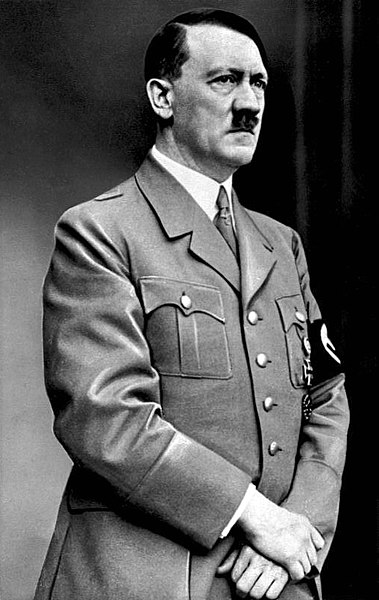
Adolf Hitler


I. His birthplace
    1. He was born on April 20, 1889.
    2. He was born in Braunau, Austria.
II. His childhood
    1. His father
        a. He was abusive.
        b. He was a government official.
    2. His mother
        a. She adored him.
        b. She was a staunch Catholic.
III. His adolescence
    1. He wanted to be an artist.
           a. He was not allowed to enter a university.
           b. He copied postcards and sold them.
    2. He was very jealous of his friend Kubizek.
           a. He wanted him entirely to himself.
           b. He did not want his friend to get a job.
    3. He hardly ever had a job.
    4. He formed a racist opinion: he hated any person not a German
IV. His life  in World War I
    1. He reveled in becoming a soldier: it made him somebody.
    2. He would go through anything without a scratch.
    3. His “inner voice” would tell him to move, and where he had been would be blown up.
    4. He was promoted to a corporal.
    5. He loved being in the trenches
          a. He would stab rats with his bayonet for the fun of it
          b. He would gladly retrieve wounded: a very dangerous job
    6. He became a dispatch runner.
         a. This was a dangerous job, but he loved it, even to the point of asking other runners if he                                                 
             could deliver their messages.
         b. He was awarded six medals during his job.
   7. He was blinded by gas.
        a. It made him afraid that he would never be able to see again; never be somebody.
        b. He was blinded till the end of the war.
   8. He was told that the war had ended; that Germany had surrender.
       a. He cried because he couldn't continue fighting.
       b. He loathed the people who signed the Armistice in Versailles.
V. His life shortly after the war
   1. He was one of the few soldiers not discharged because he had won the Iron Cross.
      a. He guarded French prisoners and sorted through equipment.
      b. He was given sufficient food and clothing.
  2. He was for the Free Corps: a group of discharged soldiers who hated the rebels.
VI. He was chosen by officers to make sure others did not stop their rearming of Germany
   1. He joined the “German Worker’s Party”.
   2. He found out he could speak well in public.
       a. He spoke everywhere, and drew crowds of thousands of people.
       b. He used his speaking to fire people up against Versailles, the Weimar Republic and other
           things.
  3. He designated the Swastika symbol to Nazism
4. He changed the "German Worker's Party's name to the "National Socialist German Workers' Party" The word "Nazi" is formed from the first two words in the new name in German
VII. He rose to power
1. Many ex-soldiers joined under his Swastika banner
a. Hitler named them "Stormtroopers"
b. They enforced his rise to power against his Communist adversaries
2. He picked up different people associated with him
a. Julius Streicher, an ex-school teacher, controlled the propaganda
b. Ernst Roehm, an ex-soldier, lead the Stormtroopers
c. Rudolf Hess, also an ex-soldier, was Hitler's worshipful secretary
d. Herman Goering, an ex-airman, later headed up Hitler's airforce
3. He organised "The Beer Hall Battle"
a. It happened in the biggest beer hall in Munich, and Hitler knew the Communists would try to ruin it
b. He have orders to his 50 man bodyguard to attack at any sign of trouble
1. He had an audience of over 2000, of which half were Communists
2. The Communists started a fight with beer mugs being thrown at Hitler
3. The Stormtroopers drove the Communists out after a bloody battle, and Hitler continued his speech
4. By 1923, the Party had over 35,000 members in Munich, and in all of Bavaria, 150,000
5. In November, he planned another revolt
a. He planned to take over the Bavarian government, and then march to Berlin and take over the Weimar Republic
b. On Nov. 9, 1923 the Bavarian Government had a rally in a large beer hall
c. Hitler came in unnoticed with his men
d. He then persuaded the crowd to his side.


As you probably know, Hitler rose through the ranks to become the most powerful dictator in history, and the most feared. Eventually his fanaticism caused the loss of his armies, and ultimately his downfall.


Sorry I was not able to totally complete the outline, but the book had to go to the library. The book is "Adolf Hitler" by Albert Marrin.

School/Architecture

I got to do an architecture post for school! Here it is:


This is his children's playroom. (Notice the painting over the fireplace; it is from the Arabian Nights)

   Frank Lloyd Wright’s House and Studio

    This house is a classic Frank Lloyd Wright House.  It was designed in 1889, when Wright was only twenty-one years old. It is located in Oak Park, Illinois. He built it as a home, later adding a studio and may other additions in the next twenty years. It was later converted into separate two living spaces, and was rented out.

    The house styling is a mix between Victorian and Art and Crafts, and contains many details that Wright later used in many of his houses. Some of the include using natural overhead lighting, the lavish use of art glass, prominent fireplaces, and a horizontal emphasis.

    The house also characterizes the use of natural materials and dark colors. Some of materials used are unstained wood, exposed brick, painter’s flax, and stone, and hearth tiles, and a
wood-shingled outside. This house is a wonderful example of a definition of Wright’s characteristic architecture.

My next post

My next post will be a detailed outline of Adolf Hitler.
Sorry the posts are coming more slowly!

The end of World War I

When World War I ended, and the Treaty of Versailles was put into place. Here are some of the things it decreed:

  • It condemned certain German leaders 
  • It restricted Germany from doing the following:
  • German armed forces could number no more than 100,000
  • German naval forces could number no more than 15,000 men, 6 battleships, (displacing no more than 100,000 tons each), 6 cruisers, (displacing no more than 6,000 tons displacement each), 12 destroyers, (each displacing no more than 800 tons each), 12 torpedo boats, (displacing no more than 200 tons each), and no submarines 
  • No importing or exporting of weapons
  • No poison gas, tanks, or armored cars
  • No blockading of ships
  • Restriction of machine guns, and rifles

  • These countries gained territory:
  • Yugoslavia
  • Romania
  • Greece
  • France
  • Italy
  • Belgium 
  • Czechoslovakia
  • Poland
  • Estonia
  • Latvia
  • Lithuania
  • United Kingdom
  • Japan

  • These countries lost territory:
  • China
  • Russia
  • Germany
  • Austria
  • Turkey
  • Bulgaria
  • United Kingdom
This shows how much World War I effected the world, as it's name acknowledges

  • Germany also was required to pay 132 billion marks to various countries. Germany paid some of it off, but when it split into East and West Germany, Germany decided not to continue paying it off until their country was joined back together. Once it was joined back together again in 1990, the payments were started up again. The debt was completely paid off by August 2010!


America: The New Empire
In the dawn of the 1900’s, America entered not just a new century, but a century that would result in the people reaping the results of the Industrial Revolution. Things were being invented in droves: bicycles, airplanes, cars, vacuum cleaners, electricity, movies, radios, and many more. With the use of assembly lines, things were produced in a quicker and easier way. With new medical techniques, less people died. Fewer people were getting sick from food poisoning with the technique of pasteurization, which killed unhealthy germs on food. In the political world, Teddy Roosevelt had expanded the nation with the addition of Cuba and the Philippines. And of course, he oversaw the Panama Canal’s building. Ways were changing. Women could now vote. 1 in 10 people were immigrants! Many monopolies were busted by Roosevelt and Taft, resulting in more money for the people to spend on cheaper mass made things. With war imminent, America was well prepared. With all its natural resources, it built many steel battleships, including the famous White Fleet. It also made submarines, tanks, large artillery, armored cars, machine guns, grenades, and many more new weapons. No doubt about it, America was rolling in the prosperity of the 1900’s!

Wright brothers famous flight in 1903

    Imagine living in a country were some adventurous people were driving about in four-wheeled bicycles with engines when most people still drove horses and buggies. Then imagine climbing into a wood and cloth contraption with an engine and two propellers, starting it up, taking off, and flying???!!! Wilbur Wright had this experience on December 17, 1903, near the Kill Devil Hills, four miles south of Kitty Hawk, North Carolina. He flew in the Wright Flyer, (sometimes called Flyer 1), designed by himself and his brother Orville. His first flight was only 120 ft. in 12 seconds, but later in the day on the fourth and last flight of the Flyer 1, he made the distance of 852 feet!  The Flyer 1 had been made resembling the gliders they had built and tested a Kitty Hawk in previous years, with the addition of an engine. It had room for one person, was 40 ft. wide and 21 ft. long, with a top speed of 30 mph. The U.S. Smithsonian Institution described the machine as: “...the first powered, ‘heavier-than-air’ machine to achieve controlled, sustained flight with a pilot aboard.” Other flying contraptions had not been controlled, had not made longer flights, or had not been powered by an engine. This was a triumph for the Wright brothers. A couple days before, Samuel P. Langley’s Aerodrome had failed to fly, resulting in reporters predicting that  flight would not be accomplished for another hundred years. Imagine their surprise when they learned later that the Wright’s had flown a few days after the crash of the Aerodrome! Flight has progressed amazingly! In less than 110 years planes are now flying at speeds of over 15,000 mph! That is 500 times faster than the Wright’s plane could fly. It still amazes me that the Wrights unlocked so many more secrets to flying than others, with much less money, and with homemade tools! Nowadays, we see and hear planes all the time, but they are a reminder of the perseverance and ingenuity of the Wright brothers and of the Flyer 1.

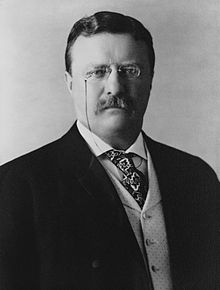
Some facts I learned in school about Teddy Roosevelt that I thought would be interesting to post:

          
Teddy Roosevelt: The Man and his Life
Sorry it shows up with a gray background. I had to copy/paste it from Google Docs, and it wouldn't show up, so I had to give it a background. There are supposed to be bullet points, but you can't see them. These are just some facts, not a report

  •           Teddy Roosevelt was born October 27, 1858 to Theodore Sr. and Martha Roosevelt.
  • He was the second of four children in the family. He was home schooled most of his life because of his physical ailments. They affected much of his early life:
  • He had to sleep sitting up so he could get enough breath
  • He schooled at home because of his breathing issues
  • He would much rather play alone then with others because they they played more strenuous games
  • When he was a toddler, he had a very hard time breathing, so to get air in his lungs, his father would dash around the city in a carriage trying to get air in his lungs. As a last measure, his father made him smoke his pipe, which would result in him coughing and bringing air into his lungs
  • His father told him that God had given him a body, but he could build it up, and make it stronger. So he took on the challenge, and did a rigorous exercise routine every day. It resulted in him being very fit for the the rest of his life
  • He read two or three books a day, in many different languages
  • He wrote 24 books, and 150,000 letters!
  • He found and explored an unknown river in Brazil, resulting in it being named the Rio Roosevelt by the Brazilians
  • He attended Harvard
  • He married twice
    • His first wife, Alice, not to many years after they were married, leaving him one child
    • His second wife, Edith, was his wife for the rest of his life, and had five children with him


His different political positions:
  • State Assemblyman
  • He served on the U.S. Civil Service Commission
  • He served as New York City Police Commissioner
  • Assistant Secretary of the Navy
  • He was elected governor of New York
  • He was vice president for McKinley
  • He became President
  • He was against Trusts and made a 20,000 word speech to Congress about it.


  • He was the youngest President in office and the youngest Assembly man in office in political history
  • He was the only person in history to receive the highest military award, the Medal of Honor, (he was nominated for it after the Mexican war, but did not receive it. Later, in 2001, he was rewarded it.) and the highest award for peace
  • He was also the first president to be seen riding in a automobile
  • He was a Lieutenant Colonel and led the Rough
Riders in the famous charge up San Juan Hill.
Related Posts Plugin for WordPress, Blogger...